Roman Gladius
PBR low poly models of a Gladius, Pompeii and Mainz.
Gladius was one Latin word for sword, and is used to represent the primary sword of Ancient Roman foot soldiers. Early ancient Roman swords were similar to those of the Greeks, called xiphos. From the 3rd century BC, however, the Romans adopted swords similar to those used by the Celtiberians during the early part of the conquest of Hispania. This sword was known as the gladius hispaniensis, or "Hispanic sword".
The sword was made of steel and wood.

Gladius Pompeii. The sword has parallel cutting edges and a triangular tip

Blade length ~45–50 cm (18–20 in). Sword length ~60–65 cm (24–26 in). Blade width ~5 cm (2.0 in). Sword weight ~700 g (1.5 lb) (wooden hilt).
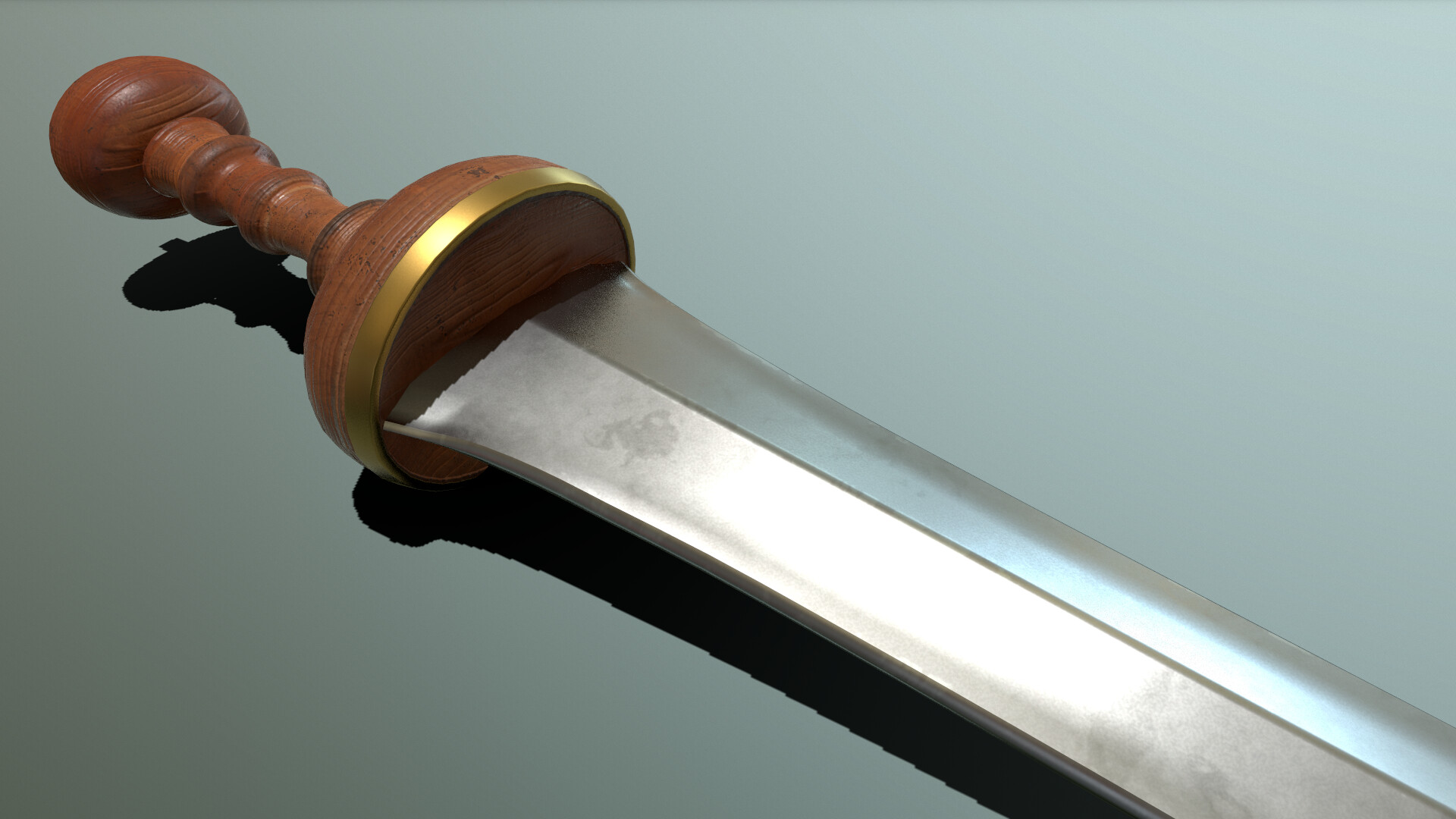
Mainz gladius. The Mainz variety is characterized by a slight waist running the length of the blade and a long point.
Gladius Pompeii

Blade length ~50–55 cm (20–22 in). Sword length ~65–70 cm (26–28 in). Blade width ~7 cm (2.8 in). Sword weight ~800 g (1.8 lb) (wooden hilt).
Roman Mainz Gladius

Roman Scabbard

Scabbard of laton and leather.